Why Gun Ownership Is So High in the United States
The Current State of Gun Ownership in the United States and International Comparison
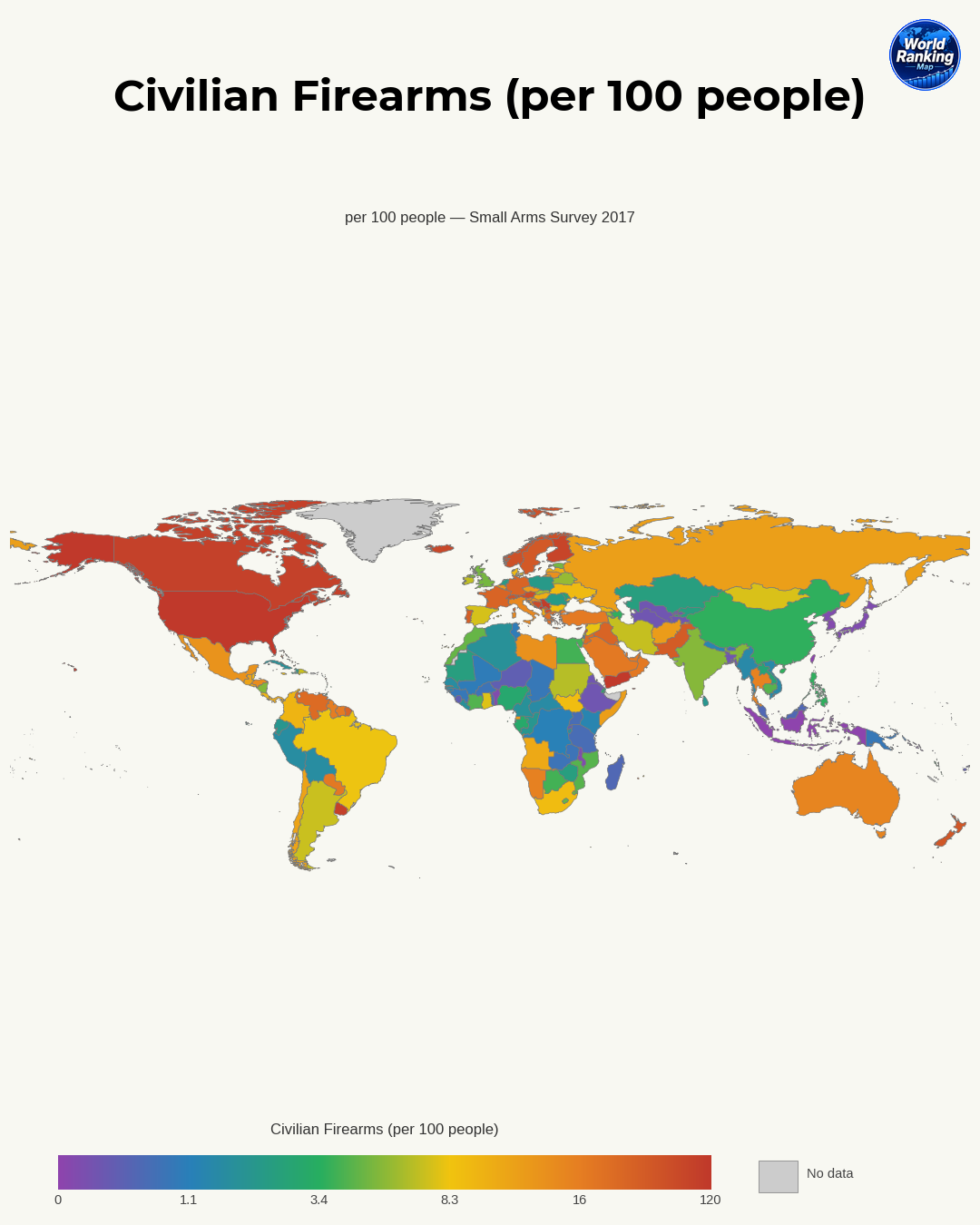
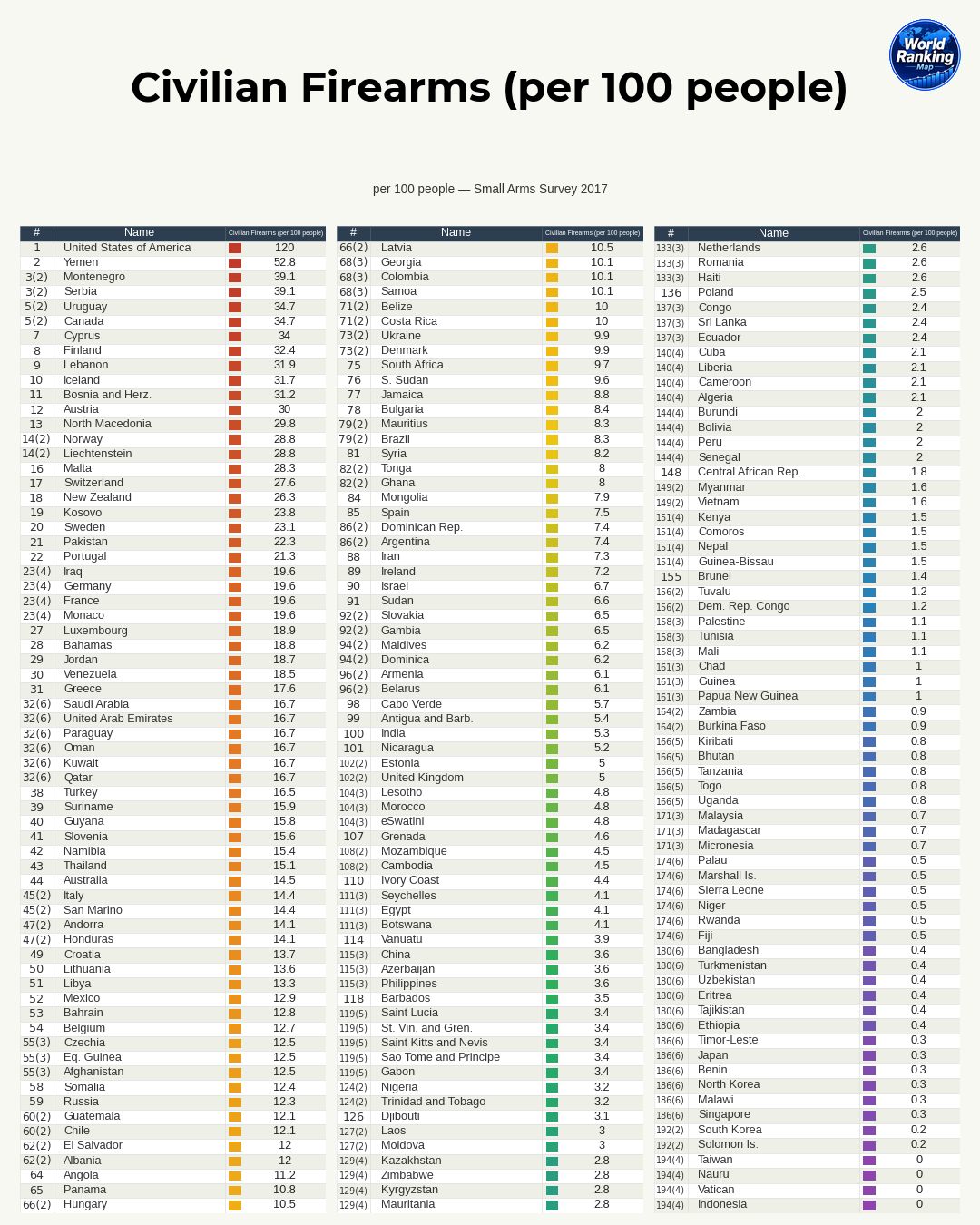
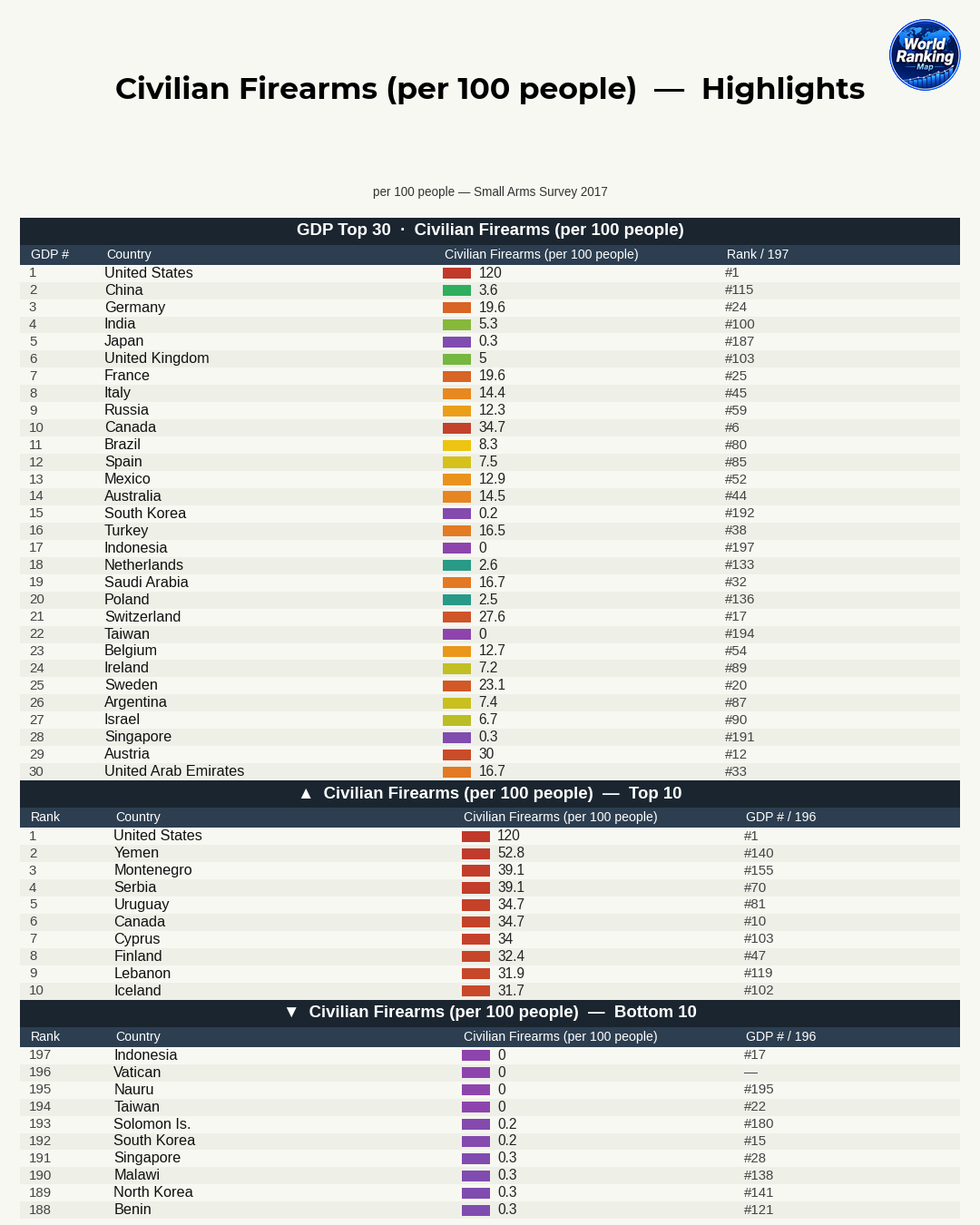
The United States is often cited as the country with the largest civilian gun ownership in the world. According to estimates from international research institutions and small-arms databases, the number of civilian firearms in the U.S. is assessed to exceed the population. This means that gun ownership is not merely common; per-capita gun ownership is extremely high compared with other developed countries.
Other high-income countries also have hunting traditions or sport shooting cultures, but it is rare for firearms to be so widely distributed among households and individuals as they are in the United States. In Canada, Australia, Germany, Japan, and the United Kingdom, gun ownership may be legally possible or allowed under limited conditions, but licensing procedures, storage rules, and purchase requirements tend to be stricter. By contrast, in the United States, historical, constitutional, and cultural factors have combined to justify gun ownership far more broadly.
An important point in international comparison is that America’s high gun ownership rate cannot be explained by a single law alone. It should be understood as the result of history, politics, culture, market structure, and local public safety conditions all working together.
Historical Background: The Frontier Era and the Second Amendment
America’s gun culture dates back to the colonial period before the founding of the nation and to the western frontier era. For European settlers at the time, firearms were hunting tools and means of survival, and at times a way to defend against outside threats. In an era when state administrative power and policing were not as extensive as they are today, there was a strong sense that individuals had to protect themselves and their communities.
This background was also reflected in America’s political institutions. The Second Amendment, ratified in 1791, explicitly recognized the right to keep and bear arms, and it later became the central basis for gun rights in American society. Although it originally had a strong militia and national defense context, over time many Americans came to interpret it as an individual fundamental right.
The mythos of westward expansion also had a major influence on the formation of gun culture. For a long time, American popular culture has idealized the frontier spirit: the image of a person who pioneers unknown land and lives independently without outside interference. In this process, firearms came to symbolize not just a tool, but independence and civic rights.
Cultural Factors: Values of Freedom, Self-Reliance, and Self-Defense
In the United States, firearms are often seen not as tools of crime but as symbols of freedom. Many gun owners view firearms as a check on state power, a means of personal choice, and a way to protect their families. This perception tends to be especially strong in conservative communities and rural areas.
One of the core values of American political culture is individualism. The attitude that individuals should solve problems on their own rather than rely too heavily on the state creates a favorable environment for gun ownership. In this logic, firearms are not just objects, but the last resort that can help protect oneself and one’s family in a crisis.
Social perceptions of firearms also vary widely by generation, region, and political orientation.
- For some, firearms are part of hunting, recreation, and sport shooting.
- For others, they are tools for home defense and crime prevention.
- For still others, firearms are symbols of constitutional freedom.
In this way, firearms do not have a single meaning in American society. But with these overlapping meanings, a culture has persisted that sees gun ownership as a normal and legitimate choice.
Legal and Institutional Structure: Federalism and Differences in State Gun Regulation
To understand gun regulation in the United States, one must look at its federal system. The U.S. has federal gun laws, but the actual level of regulation varies greatly from state to state. Some states impose waiting periods for purchases, enhanced background checks, restrictions on assault weapons, and limits on magazine capacity, while others have relatively looser permit requirements.
These differences directly affect access to firearms. Even residents of strictly regulated states may purchase guns in neighboring states with looser rules, or be affected through interstate movement and transactions. In other words, differences in state regulation make it difficult to enforce consistent nationwide control.
In addition, the U.S. judiciary, especially the Supreme Court, has in recent decades issued rulings interpreting the Second Amendment broadly as an individual right. Such precedents can act as constitutional constraints when state and local governments attempt to introduce stronger regulations.
As a result, the American system has the following characteristics:
- Basic federal rules exist.
- The strength of regulation varies greatly by state.
- Constitutional interpretation and legal precedent limit or shape the scope of regulation.
This structure is one of the factors that makes it difficult to pursue nationwide policies aimed at reducing gun ownership.
Industrial and Market Factors: Gun Manufacturing, Lobbying, and Consumer Culture
America’s high gun ownership rate is also linked to a powerful industrial and market structure. The United States has a major global market for firearms manufacturing and sales, and the markets for pistols, rifles, shotguns, as well as various accessories and ammunition, are enormous. Firearms are not only a matter of rights; they are also part of a huge consumer goods market.
Gun-related organizations and industry groups are also politically influential. In particular, gun-rights advocacy groups have intervened in policymaking through campaign funding, voter mobilization, and campaigns against legislation. They frame gun regulation not as a simple safety policy, but as an infringement on constitutional freedom, rallying their supporters around that message.
Consumer culture matters as well. In the United States, gun ownership is reproduced as part of a hobby and lifestyle through gun shows, shooting ranges, hunting seasons, sport shooting competitions, and online communities. Some consumers own not just one firearm, but collect multiple types or purchase them for different purposes.
This market environment further expands gun ownership.
- Supply is abundant and access routes are diverse.
- Gun ownership is linked to hobby, identity, and community activity.
- The industry and advocacy groups continuously exert influence to loosen or block regulation.
Public Safety and Social Factors: Crime, Distrust, and Regional Gaps
One reason gun ownership is so high is concern about public safety. Regardless of actual crime rates, many Americans worry about robbery, home invasion, neighborhood violence, and the possibility of social disorder. In particular, news coverage and social media can repeatedly expose people to crime stories, increasing the sense of insecurity.
Distrust in government and law enforcement also plays a role. Some citizens believe the police may not arrive in time during an emergency, and therefore think they must have their own means of self-defense. This perception can be especially strong in rural or outlying areas where police response times may be longer.
Regional differences are also important. The living environments of urban, suburban, and rural America differ greatly.
- In rural areas, firearms may be part of everyday life because of hunting and wildlife control.
- In urban areas, concerns about crime and personal safety are often cited as reasons for gun ownership.
- In areas with strong political and economic alienation, distrust of the central government or established institutions can lead to a preference for firearms.
In addition, social polarization, racial tensions, political conflict, and crises such as the pandemic or social unrest have all led to spikes in gun purchases. In other words, firearms are not merely tools for responding to crime; they are also consumed as a personal hedge against an uncertain society.
Recent Changes and Debate: The Clash Between Calls for Regulation and Defense of Rights
In the United States, every major mass shooting reignites calls for stronger regulation. School shootings, shootings at large shopping malls or places of worship, and mass shootings in communities shock public opinion and trigger policy debates over stronger background checks, restrictions on assault weapons, and measures to block access for high-risk individuals.
But these regulatory debates quickly collide with arguments for protecting rights. Gun-rights advocates argue that the actions of criminals should not be used to restrict the rights of lawful owners. By contrast, supporters of stronger regulation believe that America’s high firearm accessibility increases the toll of gun deaths and accidents, suicides, and the scale of harm from mass shootings.
The main issues in recent debates are generally the following:
- How far should universal background checks be expanded?
- Should assault weapons and high-capacity magazines be restricted?
- How should mental health issues and firearm access be addressed together?
- Should access be further restricted for people with a history of domestic violence or warning signs of risk?
- Where should the line be drawn between the rights of the Second Amendment and public safety?
Ultimately, the reason gun ownership is so high in the United States cannot be explained by just one or two factors. The history of the nation’s founding, constitutional rights, individualist culture, federal structure, a massive industry, public safety concerns, and political polarization have overlapped over a long period to create the reality we see today. For that reason, America’s gun problem is not simply a policy issue; it is a representative debate that shows how American society understands the balance between freedom and safety.