Countries with High Obesity Rates and Their Causes
Which Countries Have the Highest Obesity Rates
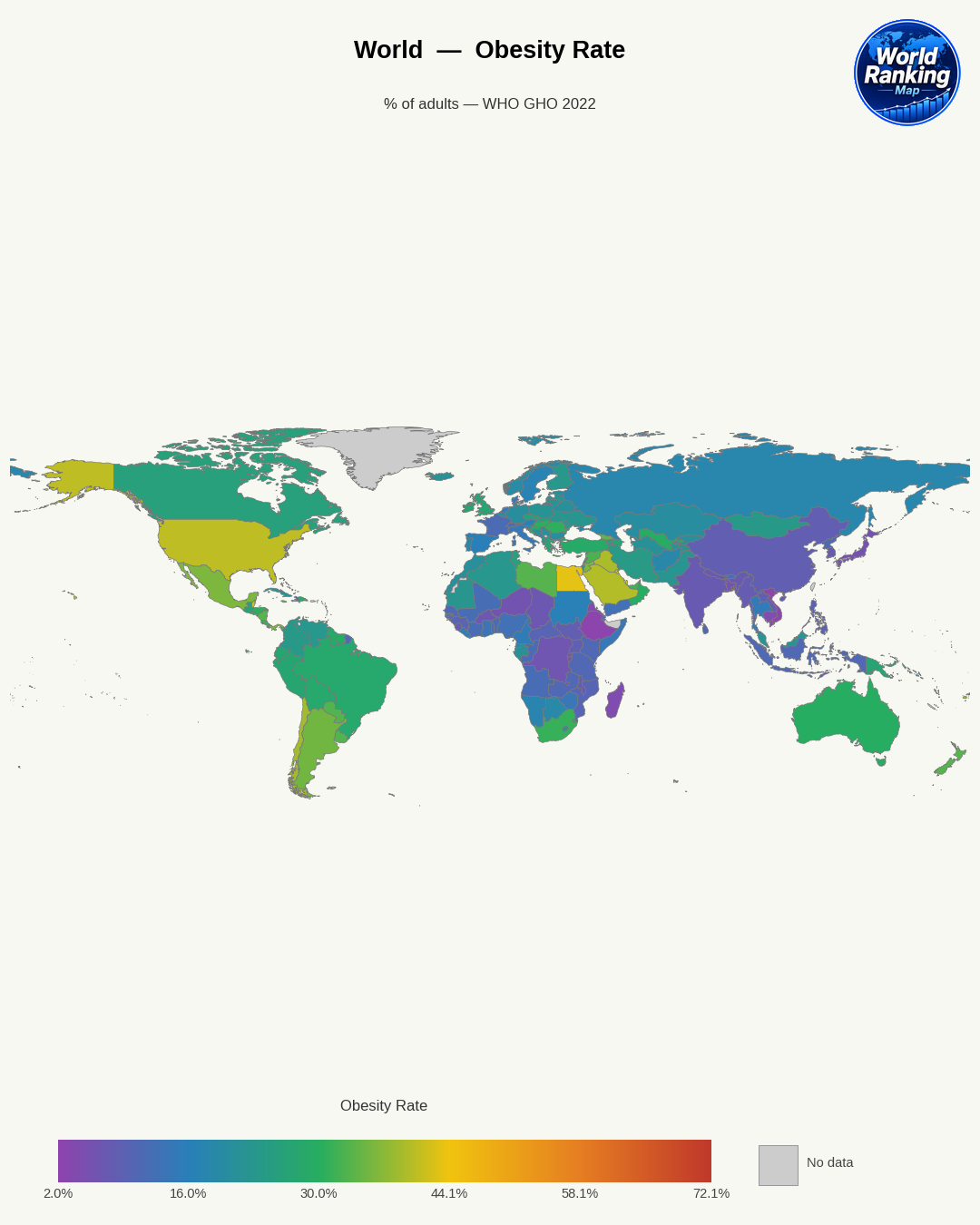
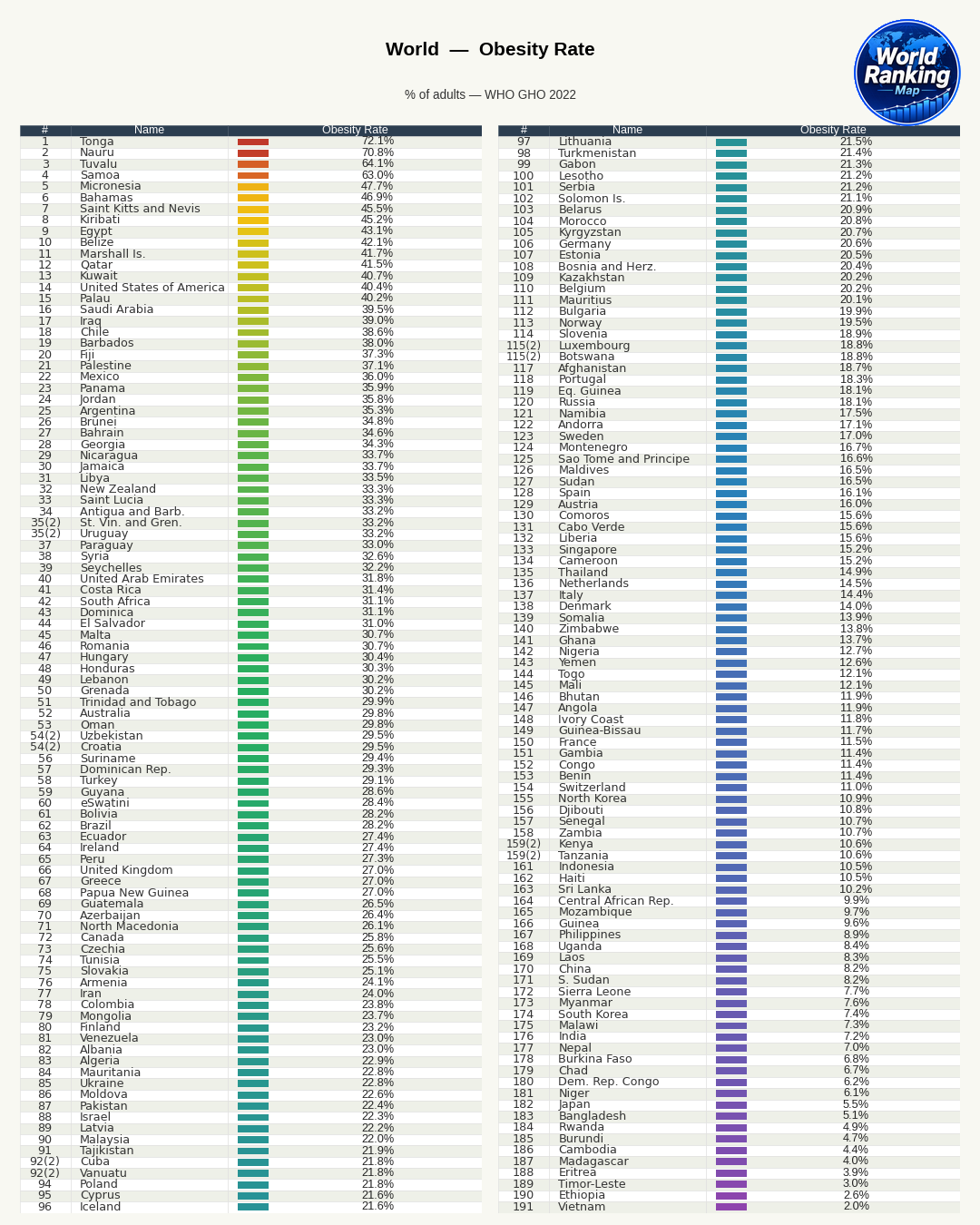
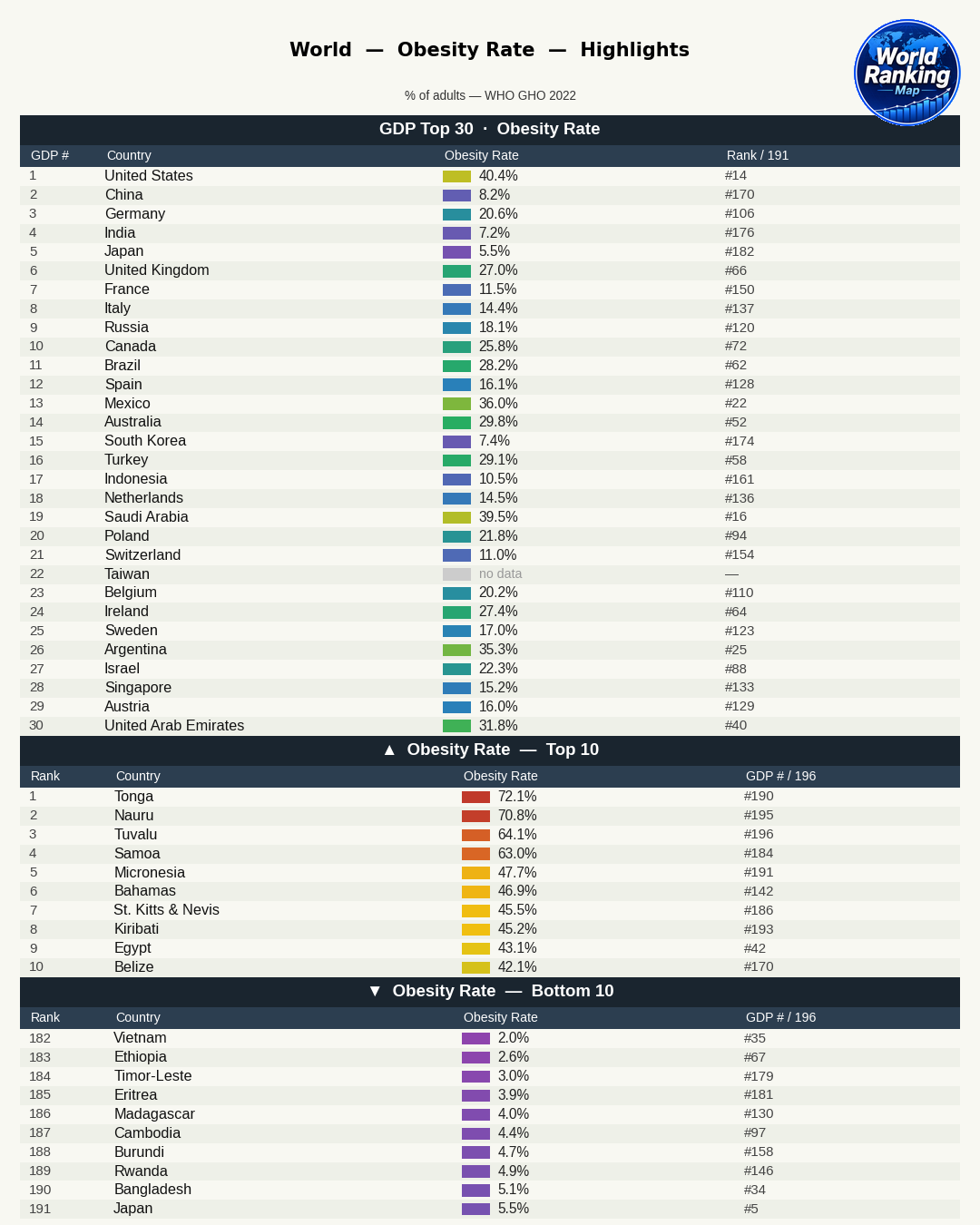
It is easy to think first of only a few countries in North America when considering the world’s highest obesity rates, but in reality they are spread widely across Pacific island nations, some Middle Eastern countries, the Caribbean region, and some developed countries. In particular, Pacific island countries such as Nauru, the Cook Islands, Palau, the Marshall Islands, Tuvalu, and Samoa are often cited as countries with very high adult obesity rates.
These countries share several common features. Traditional diets have rapidly broken down, dependence on imported processed foods has increased, and in many cases physical activity has declined due to urbanization and lifestyle changes. They also tend to have structural characteristics such as small land areas or weak domestic food production bases, making it easier for cheap, high-calorie foods to become the center of the diet.
How Is Obesity Measured
Obesity rates are usually measured based on body mass index (BMI, Body Mass Index). BMI is calculated by dividing weight in kilograms by the square of height in meters, and generally a BMI of 30 or higher is classified as obese, while 25 or higher is classified as overweight. In international comparisons, the obesity rate of a country is usually presented as the share of adults with a BMI of 30 or higher.
However, caution is needed when comparing countries. BMI is simple and widely used, but it does not fully reflect body fat distribution, muscle mass, or ethnic and racial body characteristics. For example, the health risks associated with the same BMI can differ. In addition, some statistics use self-reported height and weight, while others use measured data, which can lead to differences in the numbers.
When looking at obesity rates, it is also a good idea to check the following:
- Whether the figures are based on adults only or include children and adolescents
- Which year the data were measured
- Whether there are large differences between men and women
- Whether not only BMI but also abdominal obesity, diabetes prevalence, and overweight rates are high
Countries with the Highest Obesity Rates
Countries that repeatedly appear near the top in international organizations and health databases are generally similar. The exact ranking varies depending on the source and year, but the tendency for Pacific island nations to occupy the very top positions is very clear.
Countries frequently mentioned as having high obesity rates include:
- Nauru
- Cook Islands
- Palau
- Marshall Islands
- Tuvalu
- Samoa
- Tonga
- Kiribati
- Federated States of Micronesia
- Some Gulf countries such as Kuwait and Qatar
- The United States
Looking at regional trends, the most striking region is unquestionably the Pacific island nations of Oceania. Next are some oil-producing countries in the Middle East, while in North America, the United States is the representative example. Europe also has some countries with high obesity rates, but it does not dominate the very top ranks the way Pacific countries do.
This ranking cannot simply be explained as the result of “eating too much.” Many of the countries at the top share similar problems in their food systems, trade structures, healthcare access, and living environments.
Why Is Obesity So High in These Countries
One of the biggest causes is the rapid change in diet. Diets that traditionally centered on fish, root crops, fruit, coconut, and local agricultural products have gradually shifted toward refined carbohydrates, sugary drinks, fast food, and ultra-processed foods. These foods are high in calories and low in nutrient density relative to their satiety, making weight gain more likely.
The increase in ultra-processed food consumption is also closely linked to the spread of obesity. Ultra-processed foods are easy to store and distribute, and they are relatively inexpensive, so they spread quickly in countries that depend heavily on imports. However, because they are often high in sodium, sugar, and saturated fat, they can harm weight and metabolic health over the long term.
Lack of exercise is another important factor. As urbanization has progressed, lifestyles that involved walking or physical labor have declined, while car use and sedentary living have increased. The rise of office work, more screen time, and a lack of safe walking spaces also contribute to reduced activity.
In particular, in island nations or countries with harsh desert climates, it can be even harder to maintain regular physical activity because of environmental constraints. When high-calorie foods are easily available on top of that, obesity rates rise quickly.
The Influence of Economic, Cultural, and Environmental Factors
Obesity is not just a matter of individual willpower; it is strongly shaped by economic, cultural, and environmental structures. As income levels rise, eating out, delivery food, and processed food consumption can increase. Conversely, even in lower-income settings, people may rely on cheap, high-calorie foods instead of healthier fresh foods. In other words, obesity is not a problem found only in high-income countries.
Food access is also important. In regions where fresh vegetables, fruit, and protein foods are expensive or supply is unstable, diets that are high in calories but nutritionally unbalanced can easily take root. Small countries that depend heavily on imports are especially vulnerable to international logistics disruptions and price fluctuations.
Cultural factors cannot be ignored either. In some societies, there is a historical background in which a larger body size was seen as a symbol of health, prosperity, or social stability. Of course, such perceptions are changing rapidly, but social norms around diet and body shape still influence behavior.
The environment is also a key variable.
- Hot climates can reduce outdoor activity.
- If urban design is car-centered, walking and cycling become difficult.
- A lack of exercise facilities can hinder regular activity.
- Countries with low food self-sufficiency may become more dependent on imported processed foods.
The Effects of Obesity on Health and Society
Obesity is more than a weight issue; it increases the risk of a wide range of diseases. Well-known examples include type 2 diabetes, hypertension, cardiovascular disease, fatty liver disease, sleep apnea, and some cancers. In particular, abdominal obesity is closely linked to metabolic abnormalities.
The burden is not only on individual health but also on society. As the obese population grows, healthcare systems must devote more resources to chronic disease management, and the costs of medication, hospitalization, and complication management increase. Reduced productivity, premature death, and withdrawal from the labor market also lead to economic losses.
At the societal level, the following burdens appear:
- Rising healthcare costs
- Higher prevalence of chronic diseases
- Lower labor productivity
- Worsening quality of life
- Intergenerational repetition of childhood and adolescent obesity
In particular, when childhood obesity increases, the risk of obesity and chronic disease in adulthood rises, creating a long-term public health burden.
How Countries Are Responding to Lower Obesity Rates
Many countries are addressing obesity through tax policies, stronger nutrition labeling, improved school meals, and public health campaigns. A representative example is taxing sugar-sweetened beverages. The goal is to reduce consumption and encourage companies to lower sugar content.
Governments are also strengthening warning labels and calorie, sugar, and sodium labeling on food packaging so consumers can make decisions more easily. In schools, nutrition education for children, increased physical activity time, and healthier school meals are important policy tools.
Major response measures include:
- Introducing or considering taxes on sugary drinks
- Restricting junk food advertising to children
- Strengthening nutritional standards for school meals
- Designing walkable cities and expanding public exercise facilities
- Operating community-based weight management programs
- Expanding obesity counseling and early intervention in primary care
However, obesity policies may not show short-term results clearly. Because eating habits and lifestyles are deeply tied to social structures, a long-term, multi-layered approach is needed to make a real impact.
What to Keep in Mind When Looking at Obesity Rankings
Obesity rankings are useful for understanding global health issues, but there are limits to comparing countries based on numbers alone. Even with the same obesity rate, the meaning can differ depending on age structure, level of urbanization, food system, access to healthcare, and cultural background.
Also, not all countries at the top have high obesity rates for the same reasons. In some countries, dependence on imported processed foods is the main issue, while in others, car-centered lifestyles and lack of exercise may be more important. Therefore, the ranking is only a starting point; we also need to look at the social context and structural causes behind it.
Ultimately, obesity rates reflect not only a country’s health level but also its food system, urban environment, economic structure, and education level. When reading the rankings, it is important to look beyond simple stigma and ask why these outcomes have emerged and which policies can actually help.