Why the Age at First Marriage Appears Lower in Africa
Framing the Issue: Why Does the Age at First Marriage Appear Lower in Africa?
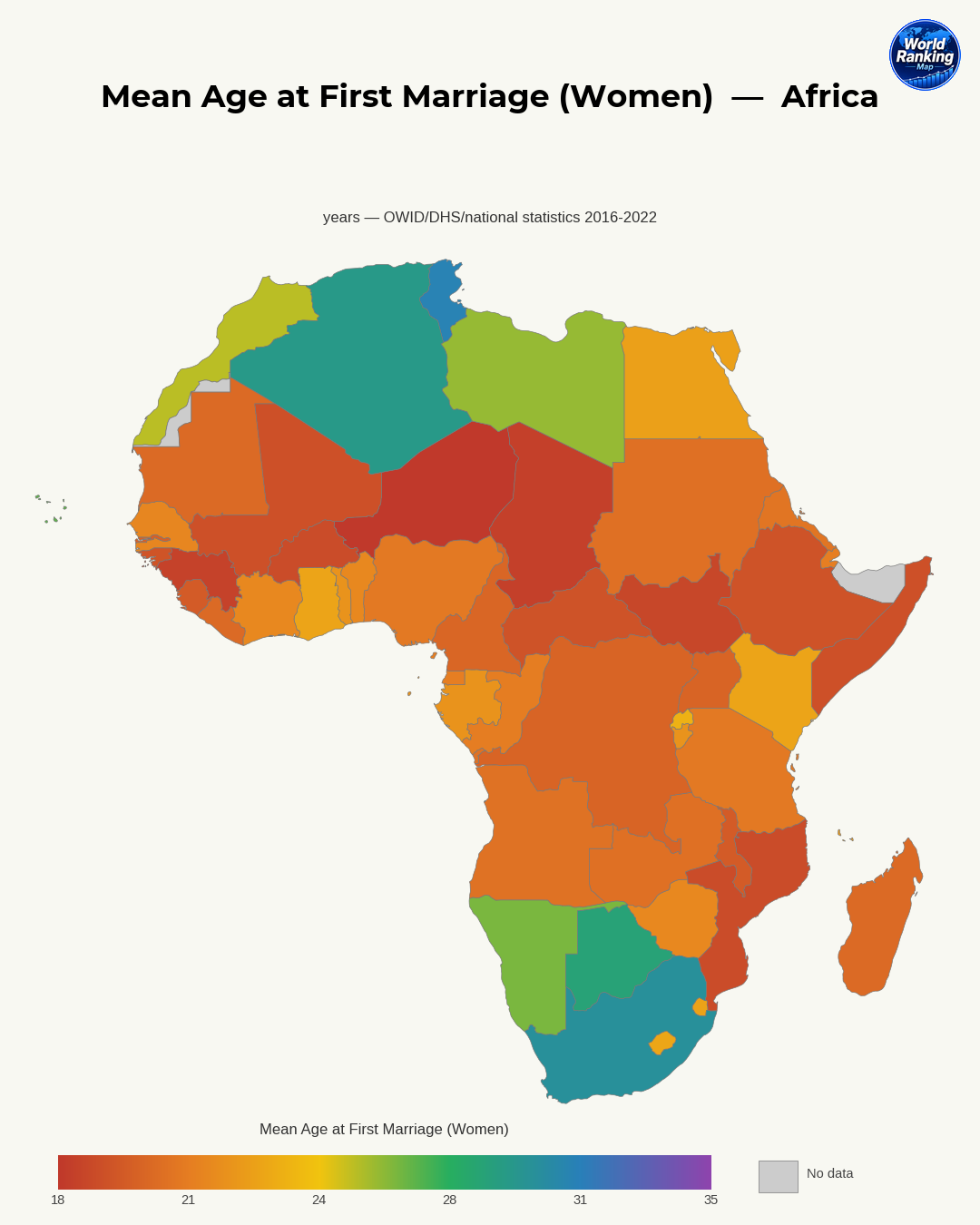
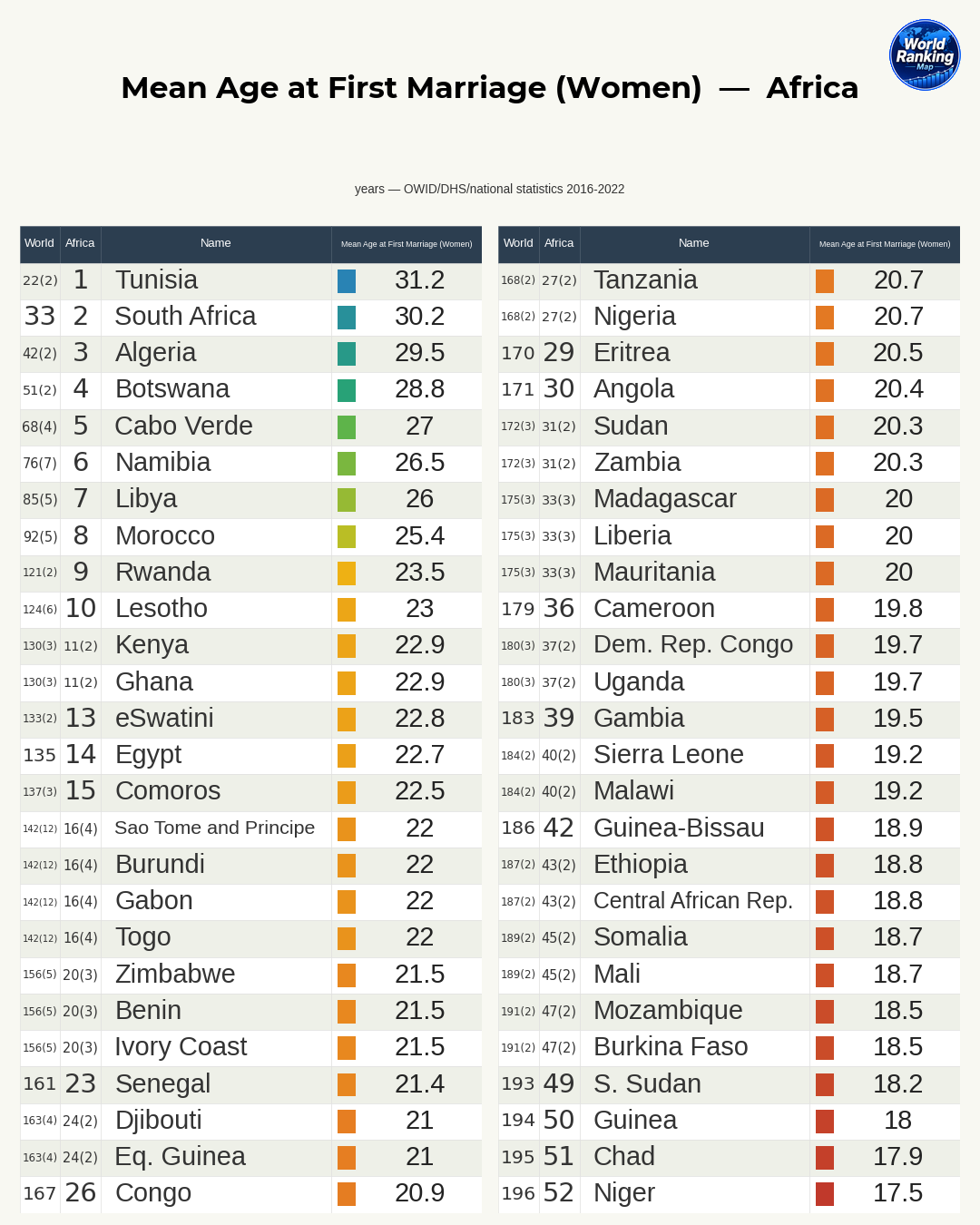
It is statistically true to some extent that the age at first marriage in Africa is lower, but it is not accurate to describe the entire continent as if it were one uniform case. North Africa and sub-Saharan Africa differ greatly in social structure, education levels, the pace of urbanization, women’s economic participation, and religious and family norms. Even within sub-Saharan Africa, Southern, Eastern, Western, and Central Africa each show different patterns.
In some countries, the average age at first marriage for women is very low and child marriage rates are high, while in others, urbanization and expanded education are rapidly delaying marriage. To understand this phenomenon, then, we need to look not at a single explanation like “African culture,” but at how education, poverty, rurality, gender norms, access to health care, law enforcement, and urbanization interact.
The key point is that the age at first marriage is not determined by individual choice alone. In many places, marriage is a family economic strategy and a matter of social status, and women’s life courses are still often organized around marriage and childbirth rather than school and the labor market. These structural conditions form the backdrop to lower ages at first marriage.
What the Age at First Marriage Means and Its Statistical Features
The age at first marriage refers to the age at which a person marries for the first time. In statistics, men and women are usually examined separately, and country surveys present either averages or medians. In practice, however, there are several differences in measurement.
- Whether only legal marriages are included
- Whether common-law or customary marriages are included
- Whether women in a certain age group are asked when they first began cohabiting or forming a union
- Whether the data come from a census, household survey, or health survey
For this reason, when comparing figures across countries, it is important to check whether the same definition and survey method are being used. In some parts of Africa in particular, customary marriage and informal unions are widespread, so the age at legal marriage and the actual time of union formation may differ.
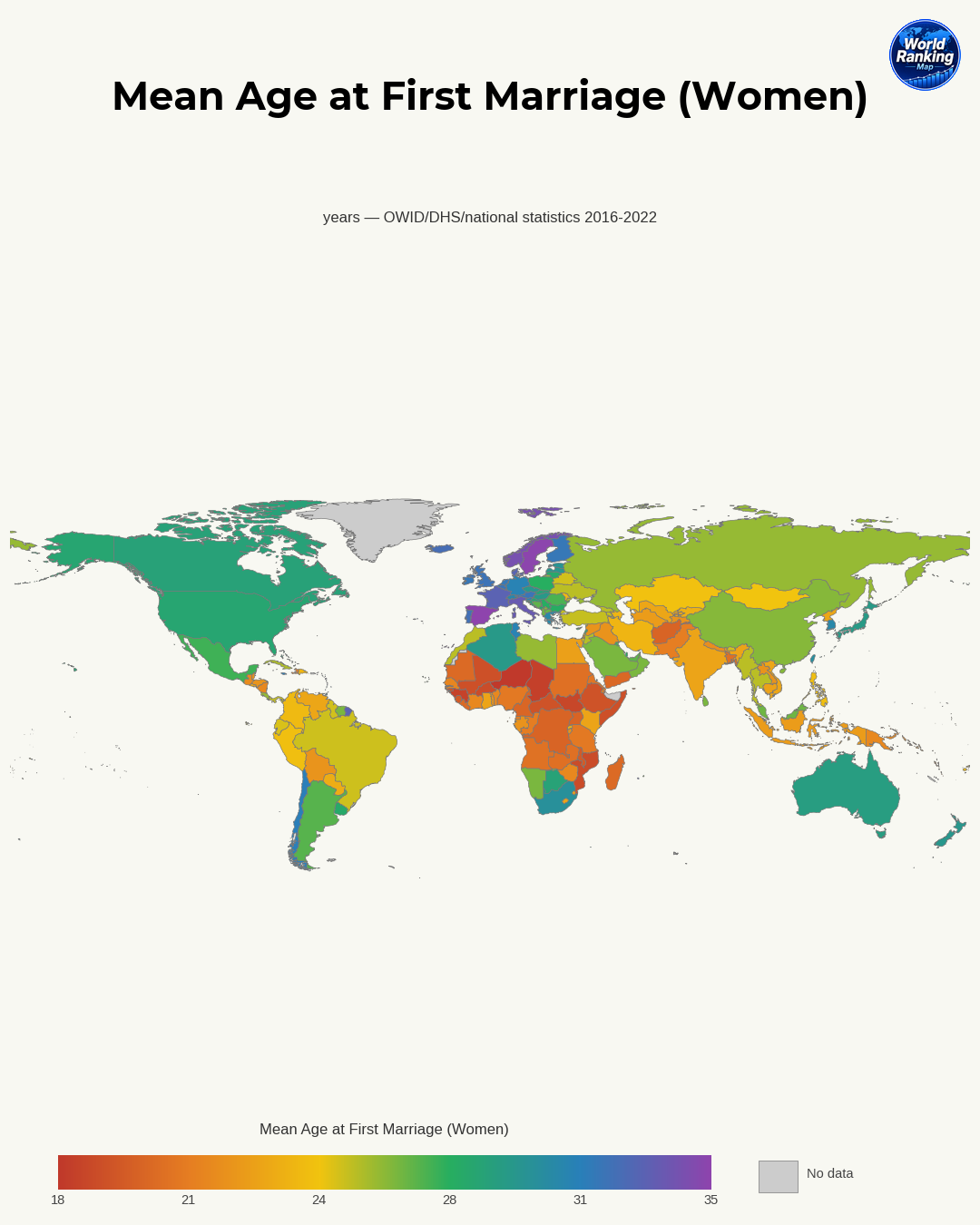
Overall, many sub-Saharan African countries have lower ages at first marriage for women than Europe, North America, or East Asia. By contrast, some North African countries show a trend similar to the Middle East, where marriage is being delayed compared with the past. In other words, Africa is a continent where the average is relatively low, but internal variation is very large.
Another feature is that women’s age at first marriage is often earlier than men’s. This is linked to different social expectations for men and women: men are often expected to marry after securing a certain income or livelihood base, while women are expected to marry earlier in a structure centered on childbirth and domestic roles.
Education Levels and How Long Women Stay in School
One of the strongest variables explaining the age at first marriage is women’s level of education. In general, the longer women stay in school, the later they marry. Those who complete only primary education tend to marry earlier than those who continue on to secondary or higher education.
The reason is fairly clear. The longer someone remains in school, the more marriage and childbirth are naturally postponed, and education gives women more information and bargaining power. Women who continue their studies are also more likely to find employment, so marriage is no longer the only realistic path to survival.
However, in many low-income countries, girls’ transition rates to secondary education and graduation rates remain low. Tuition costs, long distances to school, safety concerns, lack of menstrual hygiene facilities, domestic labor burdens, and early pregnancy all contribute to school dropout. In rural areas especially, families often see marriage as a more realistic option than education.
The relationship between education and marriage is more than a simple correlation.
- Being enrolled in school itself delays marriage.
- Education increases knowledge about contraception, health, and legal rights.
- Parents tend to delay early marriage for daughters when they see education as a worthwhile investment.
- The expansion of higher education shifts women’s expected life path from “early marriage” to “employment and independence.”
Ultimately, the shorter women stay in school, the more likely the age at first marriage is to be lower. Unequal access to education lies deeply behind the low ages at first marriage seen in some parts of Africa.
Poverty, Livelihood Strategies, and Family Economic Structure
Poverty is a key factor encouraging early marriage. When households are unstable, marriage can function less as an emotional choice and more as a family livelihood strategy. Some families believe that marrying daughters off early reduces the burden of support, and in some areas marriage is seen as an economic safety net.
This is especially true where the informal economy is large and social protection systems are weak. In such settings, the family is the basic unit of survival. Marriage then becomes a means of reallocating labor, resources, and social ties between two households. The fewer opportunities women have for independent income, the more likely marriage is to occur at an earlier age.
Practices such as dowry or bride price can also play a role. While their meaning and function vary by region, when there is a transfer of goods between the bride’s and groom’s families, marriage can take on the character of an economic transaction. In some communities, a daughter’s marriage brings tangible resources into the household, increasing the incentive for early marriage. On the other hand, in societies where dowry burdens are heavy, marriage may be delayed, so this too must be understood in regional context.
Poverty also affects the age at first marriage in the following ways:
- Girls drop out of school because families cannot afford education.
- The more severe food insecurity and unemployment are, the more marriage is seen as a way to stabilize livelihoods.
- Shocks such as conflict, drought, and inflation can accelerate household decisions toward early marriage.
- When women’s labor is undervalued, their alternatives outside marriage shrink.
In other words, the phenomenon of a low age at first marriage is not simply due to “tradition,” but also to economic vulnerability and a limited opportunity structure.
Rural Social Structure and Traditional/Religious Norms
Many African countries still have large rural populations or have only recently been shaped by rural-centered social structures. In rural societies, family and community control is stronger, and marriage is often seen as the key route to attaining adult status. In this environment, early marriage approved by the family may be accepted as a more normal path than individual romance or long-term schooling.
Traditional norms matter as well. In some communities, female chastity, family honor, fertility, and domestic competence are highly valued, and these expectations push marriage earlier. Rites of passage into adulthood and community customs can also establish social standards for the age at which marriage is considered appropriate.
Religion also has an influence, but religion alone cannot explain the pattern. Even within the same religious sphere, there are large differences in age at first marriage by country and region. That said, when religious values combine with family norms, they can help justify early marriage through strong taboos against premarital sex, encouragement of early childbearing, or emphasis on traditional gender roles.
In particular, the following factors shape the age at marriage:
- Expectations that women should prioritize the roles of wife and mother
- Gendered divisions of labor in which men are breadwinners and women are caregivers
- Family-centered values that place importance on community approval and social reputation
- The practice of rushing into marriage to avoid premarital pregnancy
These norms may weaken with urbanization and expanded education, but they remain influential in rural and conservative areas.
Childbirth, Sexual and Reproductive Health, and the Legal/Institutional Environment
The age at first marriage is closely linked to teenage pregnancy. In some areas, pregnancy triggers marriage, while in others early marriage increases teenage childbirth, creating a vicious cycle. The problem becomes more severe when sex education is lacking and access to contraception is limited.
There are many reasons why adolescents have difficulty accessing modern contraceptive methods. Barriers include a lack of health facilities, cost, distance, provider bias, opposition from parents or spouses, and religious stigma. In such cases, when an unwanted pregnancy occurs, marriage is often presented as the socially expected solution.
The legal and institutional environment also matters. Many African countries set the minimum legal age for marriage at 18 or have raised it over time. However, having a law does not mean that practice changes immediately. If birth registration is incomplete, it is difficult to verify age accurately, and in systems where customary law, religious law, and civil law coexist, exceptions may be applied broadly. In rural areas, weak state administrative capacity can also limit enforcement.
The key institutional variables to examine are:
- The legal minimum age for marriage and the scope of exceptions
- The completeness of birth and marriage registration systems
- Policies protecting pregnant students in schools
- Access to adolescent-friendly sexual and reproductive health services
- The actual level of enforcement of child marriage bans
Ultimately, the age at first marriage is both a product of culture and a matter of health systems, administrative capacity, and law enforcement.
Urbanization, Women’s Empowerment, and Recent Change
Over the past several decades, many African countries have seen a gradual rise in the age at first marriage. Behind this trend are urbanization, income growth, expanded education for women, and improved access to information. Cities tend to have more schools, jobs, public transportation, and health facilities, while direct family and community control is weaker. As a result, marriage is delayed, and intermediate stages such as dating, cohabitation, and career preparation become more common.
The expansion of women’s economic activity is also important. When women gain access to cash income and asset accumulation, marriage is no longer a necessary condition for survival. Work experience also strengthens women’s bargaining power in choosing a spouse and affects decisions about the timing of childbirth and the number of children.
Digital technology and media are also accelerating change. Through mobile phones, the internet, and mass media, younger generations are exposed to different life paths, and awareness of the health and educational costs of early marriage is increasing. Campaigns by governments, international organizations, and civil society groups are also playing a role in reducing child marriage.
That said, the pace of change is uneven.
- Gaps between capital regions and rural areas
- Gaps between high-income and low-income groups
- Gaps between educated and less-educated women
- Gaps between conflict-affected and stable areas
In other words, in Africa, a general trend toward later marriage and the continued practice of early marriage in some areas coexist.
The Risks of Oversimplification and What to Watch Next
Explanations like “Africans marry early by nature” are convenient but inaccurate. They erase the enormous differences within the continent and miss the reality of change. Some countries are seeing marriage ages rise quickly, while others are changing more slowly because of rural poverty and weak institutions. Even within the same country, differences by region, class, religion, and education level can be very large.
Going forward, it will be important to look not only at simple averages but also at generational change and regional distribution. The marriage experiences of women in their early twenties and women in their forties may differ, and among urban youth, the age at marriage may already be much later. It is also necessary to examine not just legal reform, but whether school retention, adolescent health services, and women’s employment are actually improving.
To summarize the key points to watch:
- Differences in age at first marriage and child marriage rates by country
- The pace of expansion in secondary and higher education for women
- Urbanization rates and trends in women’s employment
- Whether teenage pregnancy and access to contraception are improving
- The strength of law enforcement and the completeness of registration systems related to marriage
In conclusion, the low age at first marriage seen in some parts of Africa is the result of a complex combination of limited education, poverty, rural-centered social structures, gender norms, poor access to health care, and weak institutional enforcement. But this is not a fixed essence; it is a changing social indicator, and it is likely to continue moving in different directions and at different speeds across countries.