Regional Analysis of Per Capita Alcohol Consumption
What Is Per Capita Alcohol Consumption
Per capita alcohol consumption usually refers to the annual consumption of pure alcohol per person aged 15 and over in a country or region. Because it is difficult to compare beverages of different types, such as beer, wine, and spirits, official statistics convert the ethanol content of each drink into liters and add them together.
This indicator is a representative measure that gives a simple picture of a society’s drinking culture, but there are a few things to keep in mind when interpreting it.
- The figure can vary depending on whether it reflects only recorded sales or also estimates unofficial consumption such as home-brewed alcohol and illicit liquor.
- In countries with many tourists, local sales may be higher than actual resident consumption.
- In countries with a large abstaining population, the average may look low even though consumption among actual drinkers is high.
- There are limits to direct cross-country comparisons because of differences in age 기준, survey year, and statistical agencies.
Global Average and Recent Trends
Globally, per capita alcohol consumption has not shown a dramatic long-term surge, but rather divergent trends by region. The world average generally moves around several liters of pure alcohol per year, with declines in high-income regions and increases in some lower- and middle-income regions occurring at the same time.
Looking at recent trends, some traditionally high-consuming European countries have seen a gradual decline or stagnation due to greater health awareness, alcohol regulation, and population aging. Meanwhile, in parts of Asia and emerging economies with rapid urbanization, consumption has increased at times due to rising disposable income, the expansion of dining-out and nightlife culture, and the development of alcohol distribution networks.
In recent years, however, the pandemic, restrictions on dining out, supply chain changes, and inflation have made country-by-country trends more complex. In some places, home consumption increased; in others, overall consumption fell. For that reason, it is more accurate to look at long-term averages and trend lines rather than a single year’s figure.
Regional Comparison: Where Do People Drink the Most?
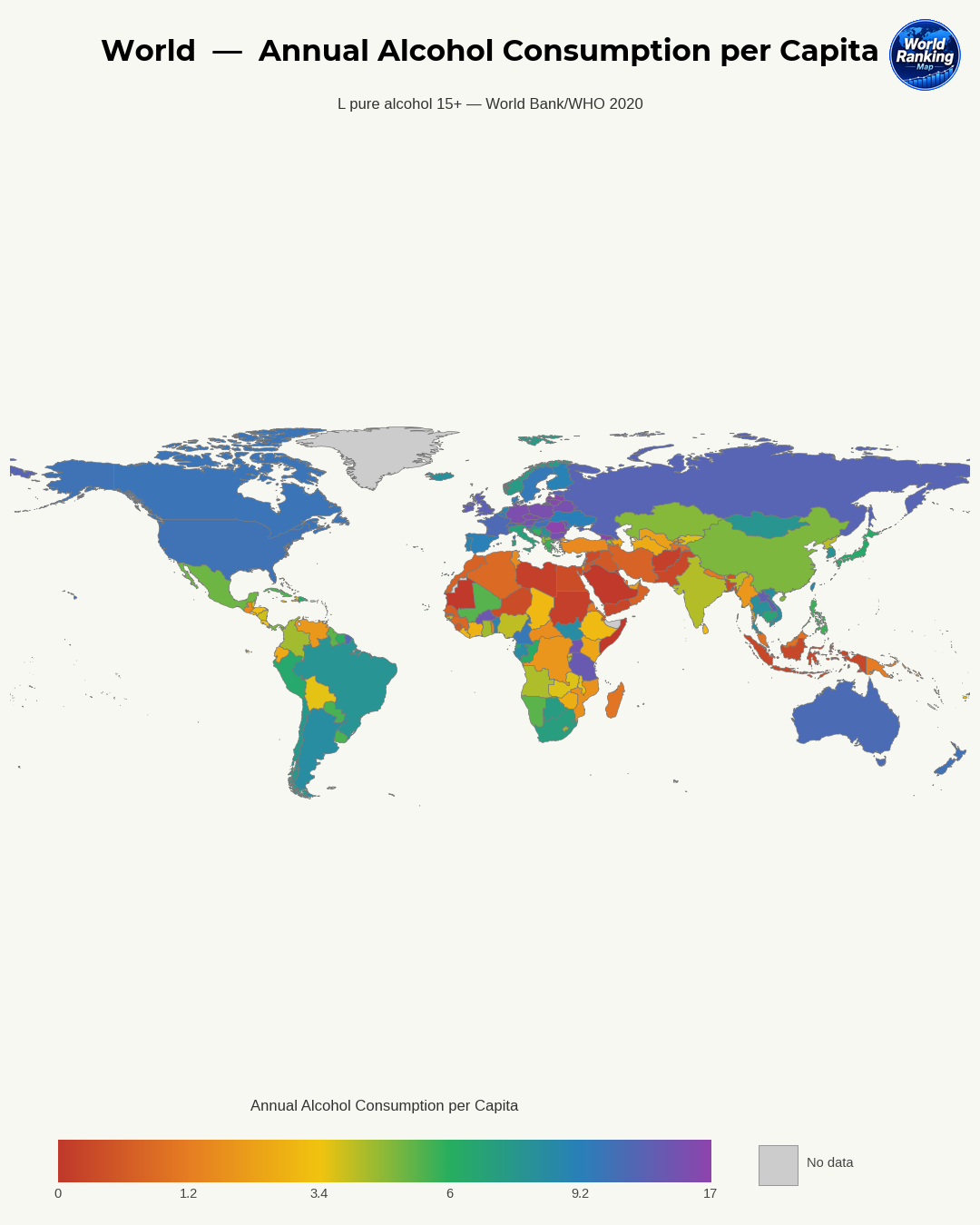
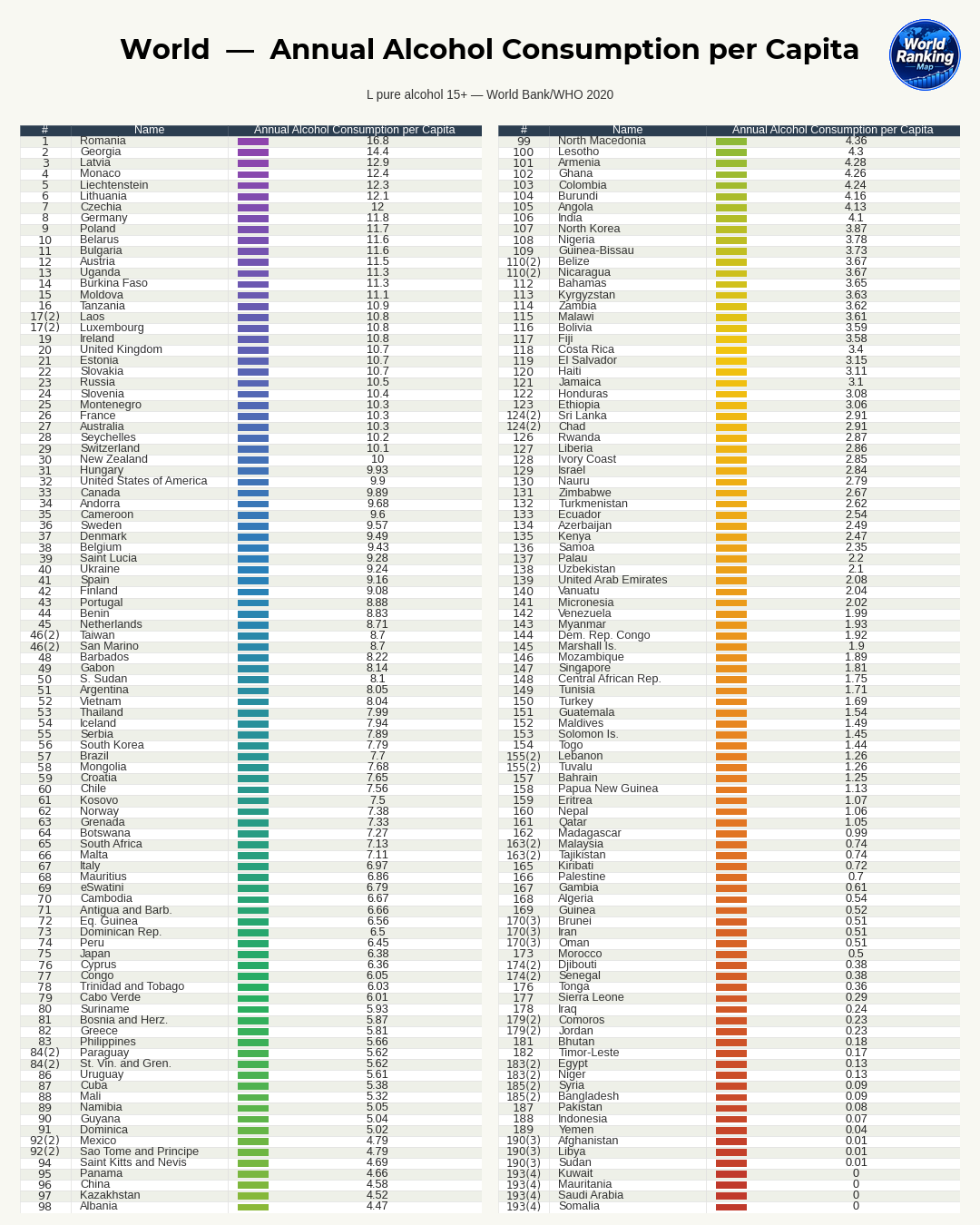
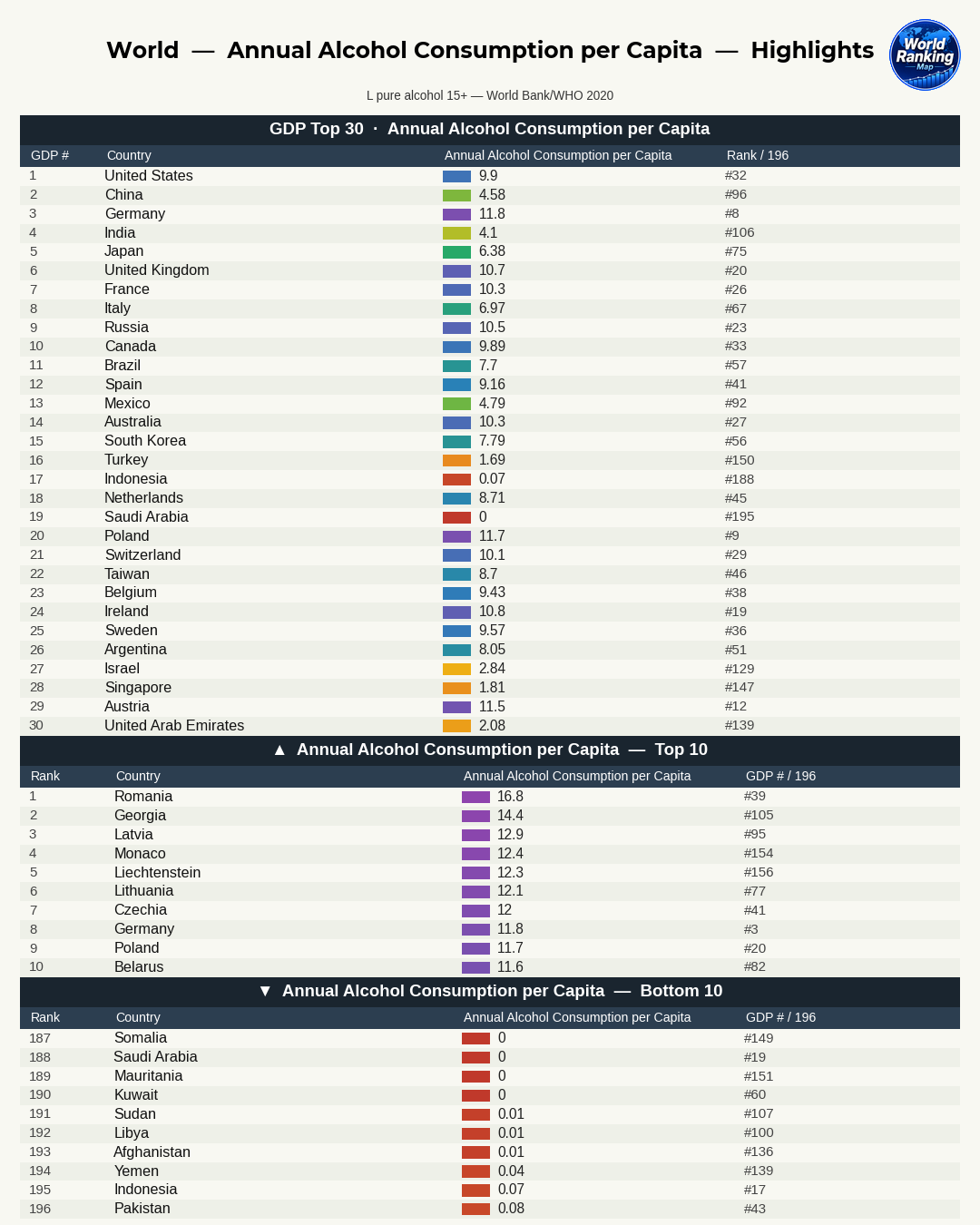
In global comparisons, Europe often shows the highest levels, followed by the Americas and Oceania, and then Asia and Africa. Of course, these are regional averages, and differences between countries within the same region are very large.
Europe has deeply rooted consumption of wine, beer, and spirits, which keeps overall levels high. In the Americas, high consumption in North America and active drinking cultures in some Latin American countries raise the average. Oceania is characterized by steady alcohol consumption in high-income countries such as Australia and New Zealand.
Asia is lower on average than Europe, but some East Asian and Central or Southeast Asian countries can show high consumption. Africa is a region with especially wide variation between countries, where strong religious abstinence cultures coexist with places where traditional alcohol consumption is active.
Europe: Why Consumption Is High and How It Varies Within the Region
Europe’s high per capita alcohol consumption cannot be explained simply by the fact that people drink a lot. A combination of long-standing brewing and wine-making traditions, the integration of drinking with meals, a broad alcohol distribution network, high purchasing power, and social acceptance all play a role. In some countries, alcohol is part of everyday social life, creating a very stable base of consumption.
Europe is also a major global producer of wine, beer, and spirits. A structure in which production and consumption are close together increases price accessibility and strengthens drinking culture tied to local identity. The tourism industry can also raise sales and consumption indicators in certain countries.
There are also clear differences within Europe.
- Western Europe: Wine and beer consumption are both common, and some countries have been declining compared with the past.
- Eastern Europe: Spirits have traditionally made up a larger share, and many countries once recorded very high consumption levels.
- Northern Europe: Prices and regulations tend to be stricter, but binge-drinking patterns are sometimes discussed as a problem.
- Southern Europe: Wine culture with meals has been strong, though drinking patterns are changing, especially among younger generations.
In other words, Europe is high on average, but what people drink, how often they drink, and in what way varies by region.
Characteristics of Asia, Africa, and the Americas
Asia is a highly diverse region. Some East Asian countries may show high consumption due to workplace drinking culture, urban consumption, and the growth of the alcohol industry, while West Asia, which includes many Muslim-majority countries, often shows very low official consumption for religious reasons. In Southeast Asia, tourism, a young population, and urbanization can all contribute to rising consumption.
In Africa, differences between countries matter more than the regional average. In some areas, religious abstinence norms are strong, while in others traditional fermented drinks or unofficial alcohol consumption are substantial, meaning official statistics may not fully reflect reality. Even where income levels are low, if locally produced traditional alcohol is widely consumed, the perceived level of drinking may feel higher than the official figures suggest.
The Americas show varied patterns when North and South America are considered together. North America has a stable consumption base supported by high income, large distribution networks, dining-out culture, and a developed advertising market. Some Latin American countries have strong festival cultures, social drinking, and beer and spirits consumption. At the same time, consumption can fluctuate significantly depending on regulatory strength and economic conditions.
Common variables across these regions include:
- Culture and religion: Differences between abstinence norms and alcohol-friendly cultures
- Income level: Purchasing power for alcohol and growth in premium product consumption
- Urbanization: Greater access to dining out, nightlife, convenience stores, and supermarkets
- Population structure: The share of young adults and patterns of social activity
Key Factors Affecting Per Capita Alcohol Consumption
Per capita alcohol consumption is not just a matter of preference; it is the result of many economic, policy, and social factors. One of the most direct factors is price. The lower the price and the easier the access, the more consumption tends to increase.
Tax policy is also important. Raising alcohol taxes can be especially effective in reducing low-cost alcohol consumption and may have a stronger impact on young people and high-risk drinkers. Conversely, when taxes are low or regulation is loose, the effect of discouraging consumption is weaker.
Sales regulations are another major variable. Restrictions on sales hours, minimum legal drinking age, advertising limits, public drinking rules, and stricter enforcement against drunk driving all affect not only how much people drink but also how they drink.
Social and cultural factors cannot be overlooked either.
- A strong workplace drinking or social drinking culture can increase drinking frequency.
- As a health-conscious culture spreads, people may shift toward low-alcohol or non-alcoholic beverages.
- Countries with large tourism industries may see visitor consumption reflected in the statistics.
- Regions with a lot of unofficial alcohol consumption may have their actual consumption underestimated.
Unofficial consumption is especially linked to health risks. Illicit liquor and home-brewed alcohol can evade taxes and regulation, but quality control is difficult and statistical capture is limited.
Health, Social Impacts, and Policy Implications
Alcohol consumption is an important public health issue because excessive drinking is associated with liver disease, cardiovascular problems, certain cancers, worsening mental health, and a higher risk of accidents, regardless of debates over what constitutes a moderate level. In societies with high per capita consumption, not every individual is necessarily a risky drinker, but the overall population burden is likely to be greater.
The social impact is also significant. Drunk driving, violence, reduced productivity, domestic conflict, and rising medical costs all create costs that extend beyond the individual to society as a whole. In particular, regions where binge drinking is common may experience greater social harm than the average consumption figure alone would suggest.
From a policy perspective, responses tailored to local conditions are important.
- In high-consumption regions, taxes, advertising restrictions, sales regulations, and expanded access to treatment may be key.
- In regions with a lot of unofficial consumption, safe alternative supply, quality control, and better statistics are important.
- In regions where youth drinking is increasing, education, regulation of digital marketing, and school and community interventions may be effective.
Ultimately, the goal is not simply to lower average consumption, but to design precise policies that reduce harmful drinking patterns.
Cautions in Data Interpretation and Conclusion
When looking at per capita alcohol consumption statistics, it is important to consider how the numbers were produced, not just the numbers themselves. Countries may differ in how they use sales data, tax data, household surveys, and health estimates, so perfectly identical comparisons are difficult.
In particular, the following factors should be considered:
- Unofficial consumption: Countries with a lot of illicit liquor, traditional alcohol, or home-brewed drinks may show lower official figures.
- Tourism effects: Countries with many tourists may appear to have higher consumption than actual resident-based consumption.
- Age structure: The average can change depending on the degree of aging and the share of young people.
- Share of abstainers: Even if average consumption is low, a society may still have heavy drinking among those who do drink.
- Differences in drinking patterns: A culture of drinking small amounts often and a culture of drinking heavily only occasionally can have the same average but very different levels of risk.
In summary, regional per capita alcohol consumption can be characterized by high levels in Europe, large internal disparities in Asia and Africa, and relatively stable consumption structures in the Americas and Oceania. However, this indicator only becomes meaningful when viewed together with variables such as culture, religion, income, policy, unofficial markets, and tourism. Therefore, when comparing countries and regions, the most important approach is to read the background and context along with the ranking itself.